

Why Least Privilege Access Is an IT Team Essential | CyberQP Blog

Why Least Privilege Access Is an IT Team Essential | CyberQP Blog

Many IT environments still grant broad, persistent access to technicians, contractors, and internal users, often without clear justification or active oversight. These standing privileges may seem convenient, but they represent a major liability. Excessive access expands the attack surface, increases the risk of lateral movement during a breach, and complicates audit readiness.

Least privilege access (LPA) offers a proven alternative. It ensures users only receive access to the systems and data they need, nothing more, and only when they need it. No more standing admin rights. No more blind spots. This approach significantly reduces risk exposure while helping teams meet compliance standards with minimal disruption.

For modern IT teams, especially those managing multiple environments or clients, enforcing least privilege access is not just a best practice, it’s the foundation of a strong privileged access management (PAM) strategy

What Least Privilege Access Really Means

LPA isn’t about limiting productivity. It’s about aligning access with need, controlling permissions with surgical precision. That means granting the least amount of privilege necessary for a task, and revoking it immediately after.

When applied consistently, least privilege prevents privilege creep, limits exposure in the event of a credential compromise, and helps block unauthorized lateral movement across networks. For helpdesk teams, this means moving away from shared or persistent admin accounts in favor of just-in-time (JIT) access with strong identity verification and full session logging.

With the right privileged access management platform in place, enforcing least privilege becomes efficient, scalable, and audit-ready, a critical advantage for fast-moving IT teams.

The Business Case for Enforcing Least Privilege

1. Contain Identity-Centric Threats:
According to Expel’s Threat Report, 68% of security investigations now involve identity-based threats, and incidents involving compromised credentials are on the rise. Limiting access based on the principle of least privilege dramatically shrinks the potential blast radius of a stolen account, reducing attacker mobility and dwell time.

2. Meet Compliance and Insurance Requirements:
Frameworks like CIS Controls, HIPAA, and SOC 2 emphasize minimizing privilege, enforcing strong identity controls, and maintaining audit trails. Least privilege access supports these goals by restricting access and generating the documentation needed for compliance and cyber insurance eligibility.

3. Improve Operational Efficiency:
Teams that rely on manual access provisioning are often overwhelmed with low-value requests and account cleanups. Implementing least privilege access with self-serve, policy-based approvals cuts through this noise. It gives technicians the access they need to do their jobs without overwhelming system admins or opening the door to unnecessary risk.

4. Scale Securely with Your Business:
As MSPs and internal IT teams scale, so do access needs. Without automation and structure, managing user privileges across multiple environments becomes unmanageable. By integrating least privilege access into a modern privileged access management platform like CyberQP, IT leaders can enforce consistent policies across clients, departments, and regions.

Common Barriers and How to Overcome Them

Despite the benefits, many organizations delay adopting least privilege access due to perceived complexity or resource constraints. Here’s how to tackle the most common obstacles.

  • Limited Visibility: Begin by auditing who has access to what. Many teams are surprised by how many dormant or over-permissioned accounts exist. This visibility is a cornerstone of any serious privileged access management effort.

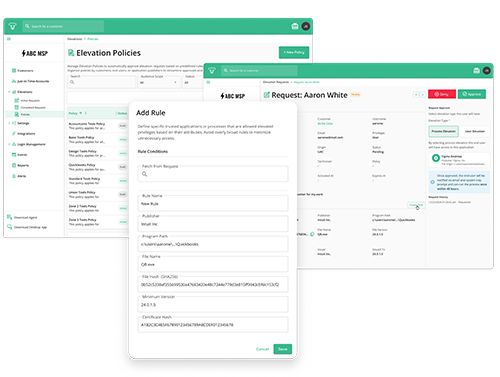
  • Cultural Pushback: Change can be met with resistance, especially if admins believe least privilege access will slow them down. Emphasize how tools like CyberQP streamline secure access through JIT elevation and fast, verified approvals.

  • Tool Limitations: Older systems may not support fine-grained or time-based access. Choosing the right PAM solution, one built for MSPs and hybrid IT environments, is key. CyberQP is purpose-built to address these challenges while maintaining operational agility.

Why It Matters Now

SMBs and MSPs face more pressure than ever, from regulators, insurers, and attackers alike. According to the Verizon DBIR, 88% of ransomware breaches involve SMBs, and over half stem from compromised credentials. Cyber insurance providers are now requiring strong PAM practices to maintain coverage, including zero standing privileges and audit-ready controls.

With identity as the new perimeter, access is the new vulnerability. Enforcing least privilege access is no longer optional; it’s essential. CyberQP enables teams to adopt this strategy with confidence, combining ease of use with enterprise-grade security.

Learn how CyberQP helps enforce least privilege access and transform your approach to privileged access management. Explore our platform and book a demo today.

CyberQP and Pax8 Accelerate Global Growth Across APAC, ANZ, and North America

CyberQP and Pax8 Accelerate Global Growth Across APAC, ANZ, and North America

Vancouver, B.C., Canada – (BUSINESS WIRE) CyberQP, a leader in Zero Trust Helpdesk Security, today announced the expansion of its relationship with Pax8, the leading cloud commerce marketplace. CyberQP and Pax8, together, will accelerate growth and extend access to CyberQP solutions across the APAC, ANZ, and North American regions.

This global expansion is the result of growing demand for CyberQP’s comprehensive platform, which consolidates privileged access management (PAM) and end-user access management (EAUM) into a single, easy-to-use solution for help desk security.

“Pax8 will be instrumental in helping us scale across the MSP ecosystem, and we’re thrilled to build on that momentum globally,” said Mateo Barraza, CyberQP CEO. “Together, we’re making Zero Trust security accessible, practical, and profitable for service providers around the world.”

Through this expanded alliance, MSPs and IT providers in the Asia-Pacific (APAC), Australia/New Zealand (ANZ), and broader North American (NORAM) regions will gain access to CyberQP’s suite of helpdesk security solutions directly through the Pax8 marketplace. This includes core offerings such as:

  • QGuard – Privileged Access Management (PAM) provides a comprehensive platform designed to eliminate standing privileges, minimize attack surfaces, and simplify secure access. By enabling just-in-time access and enforcing role-based permissions, QGuard ensures least privilege is applied by default. High-risk administrative and service account credentials are automatically rotated, mitigating risks from insider threats, keylogging, and credential-stuffing attacks. 
  • QDesk – End-User Access Management (EUAM) streamlines end-user elevation, identity verification, password resets, and account management into one powerful platform. Eliminate standing privileges, verify identities instantly, and empower users to resolve issues on their own—while IT handles account tasks effortlessly within the ticketing system.

“CyberQP delivers the kind of security innovation that’s purpose-built for the MSP channel,” said Rob Rae, Corporate Vice President of Community and Partner Experience. “This expansion into new markets enables our global partners to better protect their customers while driving operational efficiency and growth.”

As cyber threats continue to evolve, access to CyberQP solutions on the Pax8 Marketplace ensures IT service providers across the globe have the tools they need to meet compliance mandates, reduce risk, and protect critical infrastructure, without adding complexity or overhead.

About Pax8

Pax8 is the technology marketplace of the future, linking partners, vendors and small to midsized businesses (SMBs) through AI-powered insights and comprehensive product support. With a global partner ecosystem of nearly 40,000 managed service providers, Pax8 empowers SMBs worldwide by providing software and services that unlock their growth potential and enhance their security. Committed to innovating cloud commerce at scale, Pax8 drives customer acquisition and solution consumption across its entire ecosystem.

About CyberQP

CyberQP redefines Zero Trust Helpdesk Security with leading-edge Privileged Access Management (PAM) and End-User Access Management (EUAM) solutions. This unified platform enables secure elevated access for both technicians and end users, along with robust self-serve and identity verification capabilities. Backed by SOC 2 Type 2 certification, CyberQP empowers IT professionals to eliminate identity and privileged access security risks, enforce compliance, and enhance operational efficiency. Learn more at www.cyberqp.com

Media Contact

Paul Redding

SVP, Channel Marketing & Community

[email protected]

CyberQP Secures Continued Support from CIBC Innovation Banking to Drive Global Growth and Product Innovation

CyberQP Secures Continued Support from CIBC Innovation Banking to Drive Global Growth and Product Innovation

Vancouver, British Columbia–(BUSINESS WIRE)–CyberQP, the leading provider of Zero Trust Helpdesk Security solutions, today announced the continued support of its long-standing relationship with CIBC Innovation Banking. The support comes as CyberQP scales its operations globally and accelerates its mission to transform IT teams secure access and streamline operational workflows.  CyberQP’s platform helps organizations secure technician and end-user access, reduce cyber risk, and improve helpdesk efficiency through a unified Zero Trust approach 

Founded in 2019, CyberQP is a rapidly growing venture-backed Software as a Service (SaaS) provider of Helpdesk Security Automation and Privileged Access Management (PAM) solutions. Originally designed for Managed Service Providers (MSPs), CyberQP’s solutions are widely used by internal IT teams across industries to strengthen access controls, reduce operational friction, and meet compliance requirements.  

CIBC Innovation Banking’s continued partnership enables CyberQP to advance its relentless pace of product innovation in the Privileged Access Management (PAM) space while sharpening its focus on the compliance vertical, addressing a growing demand from both service providers and internal IT departments. “With CIBC’s continued support, we’re accelerating our mission to simplify helpdesk operations and elevate security standards for IT teams worldwide,” said Mateo Barraza, CEO and co-founder of CyberQP. “This relationship has been instrumental in helping us scale innovation and deliver greater value to our customers. This latest round of financing amplifies that impact.” 

“We’re proud to support CyberQP as they continue to enhance their platform and broaden their global impact,” said Joe Timlin, Managing Director, CIBC Innovation Banking. “Their purpose-built approach to PAM addresses a critical and growing need across IT teams, positioning them strongly for continued success.” 

About CIBC Innovation Banking 

CIBC Innovation Banking partners with entrepreneurs and their investors to help them achieve their ambitions each and every day. With a coast to coast market presence in Canada and the United States, we strive to make capital accessible so that leaders driving our innovation economy forward can thrive. Beyond CIBC’s growth capital, our team has a robust network of investors, extensive experience in tailoring financing solutions and providing advice throughout your lifecycle. Learn more at www.innovationbanking.cibc.com

About CyberQP

CyberQP redefines Zero Trust Helpdesk Security with leading-edge Privileged Access Management (PAM) and End-User Access Management (EUAM) solutions. The platform enables secure elevated access for both technicians and end users, along with robust self-serve and identity verification capabilities. Backed by SOC 2 Type 2 certification, CyberQP empowers IT professionals to eliminate identity and privileged access security risks, enforce compliance, and enhance operational efficiency. The mission is simple: “Empowering Access, Redefining Privilege” for help desks around the globe. Learn more at www.cyberqp.com

Media Contact:

Rae Turner

Sr. Director of Digital

CyberQP

[email protected]

www.cyberqp.com

Why Least Privilege Access Is an IT Team Essential | CyberQP Blog

CyberQP LAPS vs. Microsoft LAPS (A Comparison)

Microsoft LAPS: A Legacy Option with Limitations

Microsoft’s traditional LAPS offering works well, but only in certain environments. It’s designed for Active Directory (AD) joined workstations that are connected to the office network. That makes it a good fit for older, on-prem setups and a poor choice for hybrid and remote teams, where machines are either off network or joined to Azure AD instead of a traditional domain.

Microsoft Intune LAPS: A Modern Take with Narrow Focus

To address more modern environments, Microsoft introduced Intune LAPS, a feature within its mobile device management (MDM) platform. This version allows local admin password rotation for Intune-enrolled devices, storing credentials securely in Azure AD.

While Intune LAPS is a solid improvement over its legacy counterpart, it’s still limited to local admin passwords on Intune enrolled devices, and requires specific licensing which can make managing multiple client environments expensive.
Intune LAPS also lacks integrations with the tools you use most such as IT Glue or Hudu, making it harder to unify workflows across your team.

CyberQP LAPS: Built for You

CyberQP LAPS goes beyond local admin password management and is built to meet the needs of both MSPs and internal IT teams. In contrast to Microsoft’s solutions, we support both domain joined and non-domain joined workstations. It works for all workstations no matter where they are located in an easy to use SaaS platform that does not require Active Directory.

Key advantages of CyberQP’s solution:

  • Works without Active Directory or Intune
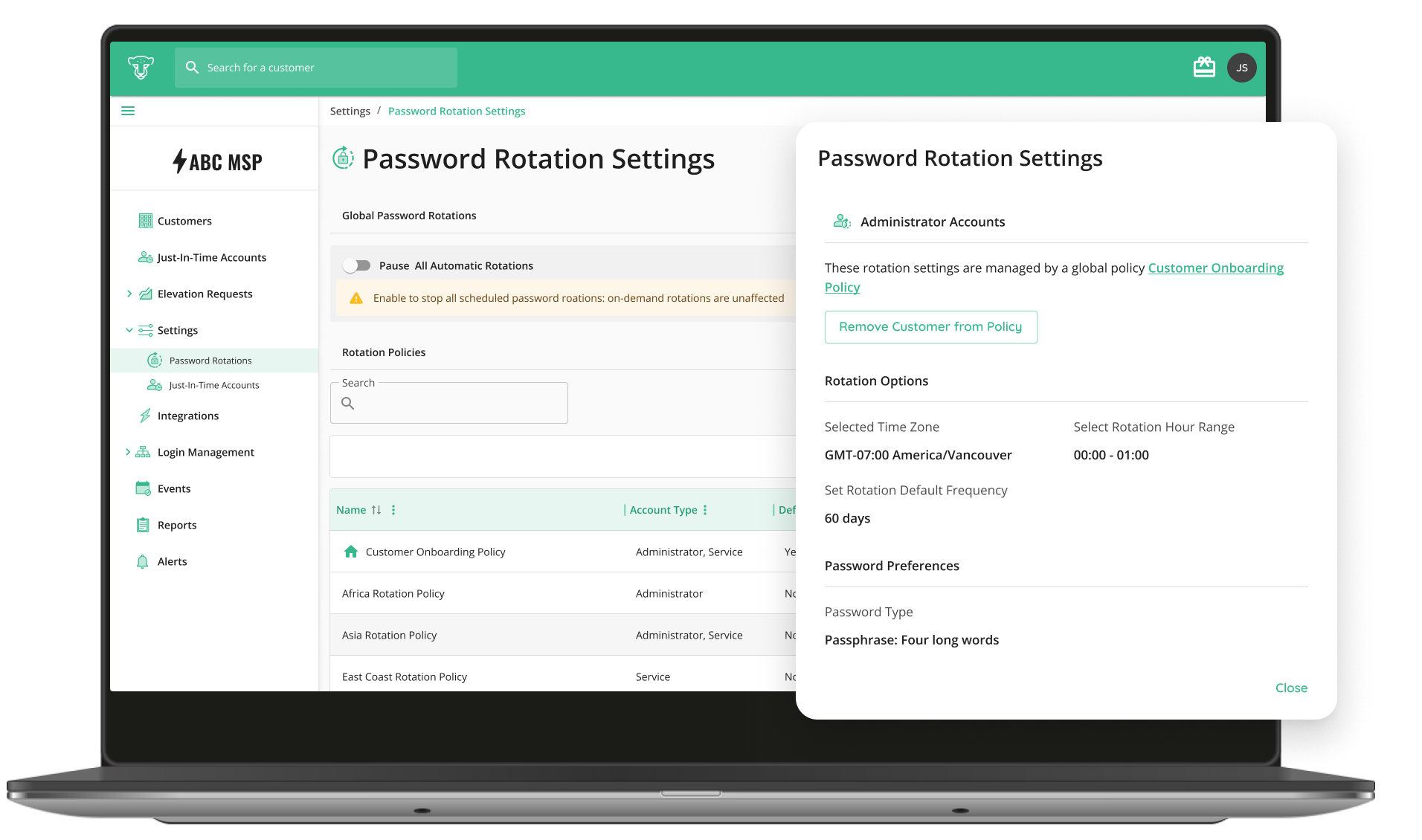
  • Rotates passwords for local, AD, M365/Azure, and service accounts
  • Includes Just-in-Time (JIT) privilege elevation
  • Integrates with tools you already use like IT Glue and Hudu
  • Available through a user-friendly SaaS platform
  • No costly licensing add-ons required

With CyberQP, password rotation is just one part of a larger Zero Trust Platform. Technicians can request access through secure workflows, local admin rights are granted temporarily with full auditability, and passwords are rotated automatically, thus, reducing the risk of misuse and lateral movement.

For growing IT teams looking for flexibility, scalability, and tool consolidation, CyberQP offers a more complete and practical solution. From password rotation and privilege elevation to identity verification and platform integrations, CyberQP is designed to secure modern environments while making life easier for your helpdesk.

Take a tour of our platform.

CyberQP redefines Zero Trust Helpdesk Security with leading-edge Privileged Access Management (PAM) and End-User Access Management (EUAM) solutions. Our platform enables secure elevated access for both technicians and end users, along with robust self-serve and identity verification capabilities. Backed by SOC 2 Type 2 certification, we empower IT professionals to eliminate identity and privileged access security risks, enforce compliance, and enhance operational efficiency. Our mission is simple: “Empowering Access, Redefining Privilege” for help desks around the globe. Learn more at https://cyberqp.com/tours/

Why Least Privilege Access Is an IT Team Essential | CyberQP Blog

Threat Brief: Marks & Spencer Breach

When a major retailer like Marks & Spencer suffers a breach, the headlines usually focus on external attackers, exposed data, or regulatory fallout. But the real cause is often more mundane and more preventable. At the core of many modern cyber incidents lies a quiet but dangerous pattern: Identity sprawl and uncontrolled privilege access. 

The recent M&S hack is a stark reminder of what happens when internal credentials, misconfigured access, or excessive privilege go unchecked. And while most security platforms chase high-velocity threats with buzzwords like AI and threat hunting, IT Professionals and SMBs need something simpler and more practical: better identity discipline. 

This is where automation and privilege control tools like CyberQP come into play not as flashy defenses, but as foundational preventative identity hygiene. 

The Real Problem: Over-Privileged, Under-Audited Identities

Most cyber incidents begin with a foothold: a technician account with too many rights, a service account nobody rotates, or a shared credential that’s still active months after offboarding. These aren’t elite zero-days they’re cracks created by Identity sprawl. 

In the M&S case, like many before it, attackers likely moved laterally via misused credentials and privilege escalation. It’s an uncomfortable truth: a single identity with too much access is often all it takes. 

Proactive Defenses That Make a Big Difference

CyberQP doesn’t block malware or isolate ransomware. What it does is far less glamorous but often far more effective:
1. Time-Limited Privilege Elevation

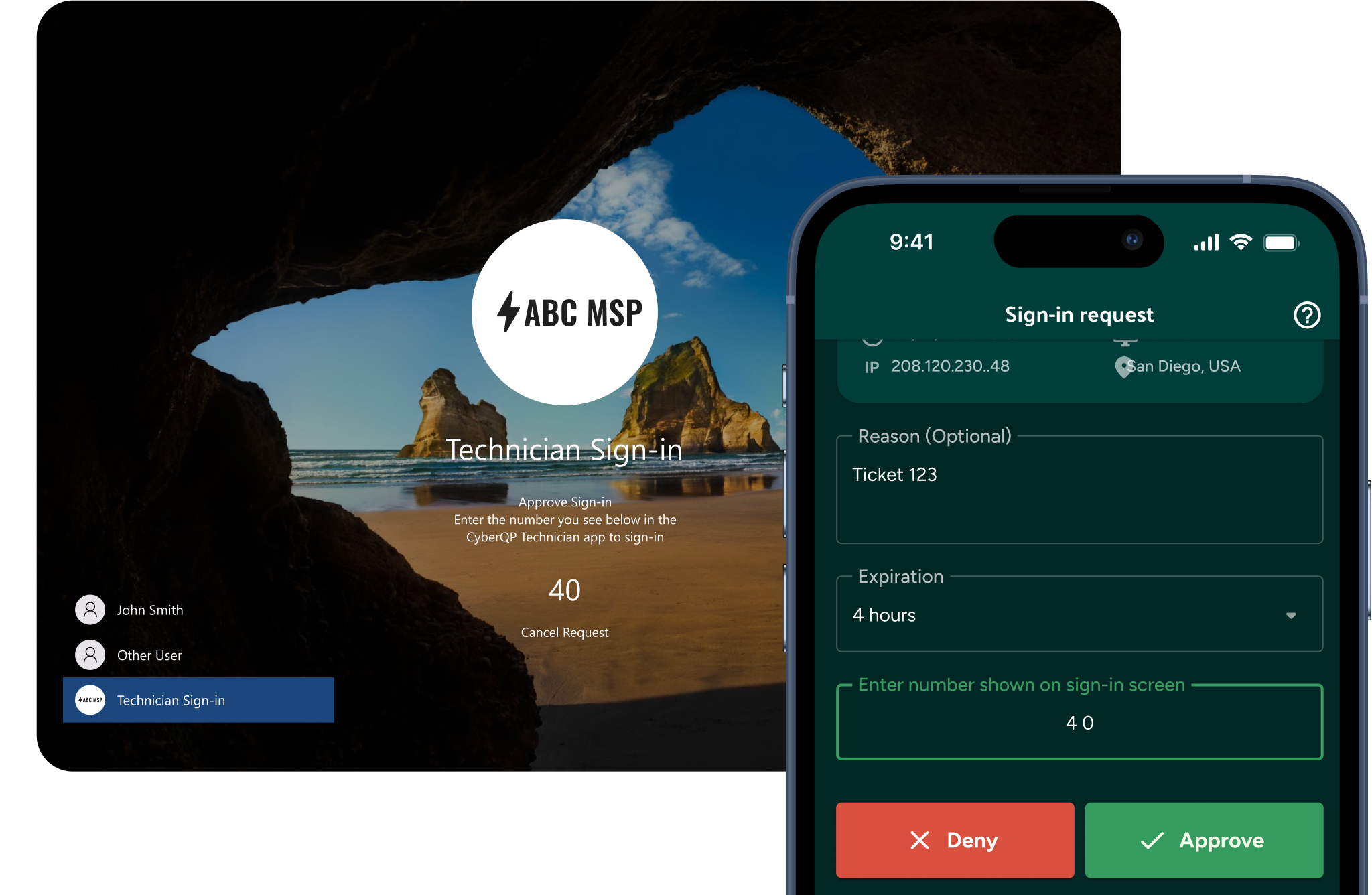
Technicians and end users only get elevated rights when they need them, and only for a short time. There are no permanent local admins floating around waiting to be compromised.

In the M&S scenario: Attackers would have hit a “dead end” without persistent elevation pathways. Take a tour of CyberQP’s End-User Elevation here.

2. Automated Credential Rotation

Passwords for service accounts, AD users, and local admin accounts are rotated automatically. not just stored securely. This eliminates credential reuse across environments.

In breaches, attackers reuse static credentials across domains. CyberQP breaks that chain. Watch a short video demo of QGuard here.

3. Just-in-Time Access Workflows

Instead of managing static privileged accounts, CyberQP allows temporary access requests with full auditability, limiting the blast radius of insider threats or compromised users. 

You can’t abuse an account that doesn’t exist until it’s requested, logged, and expired. Take a self-guided tour of our Passwordless Just-inTime Accounts now.

4. Helpdesk Identity Verification

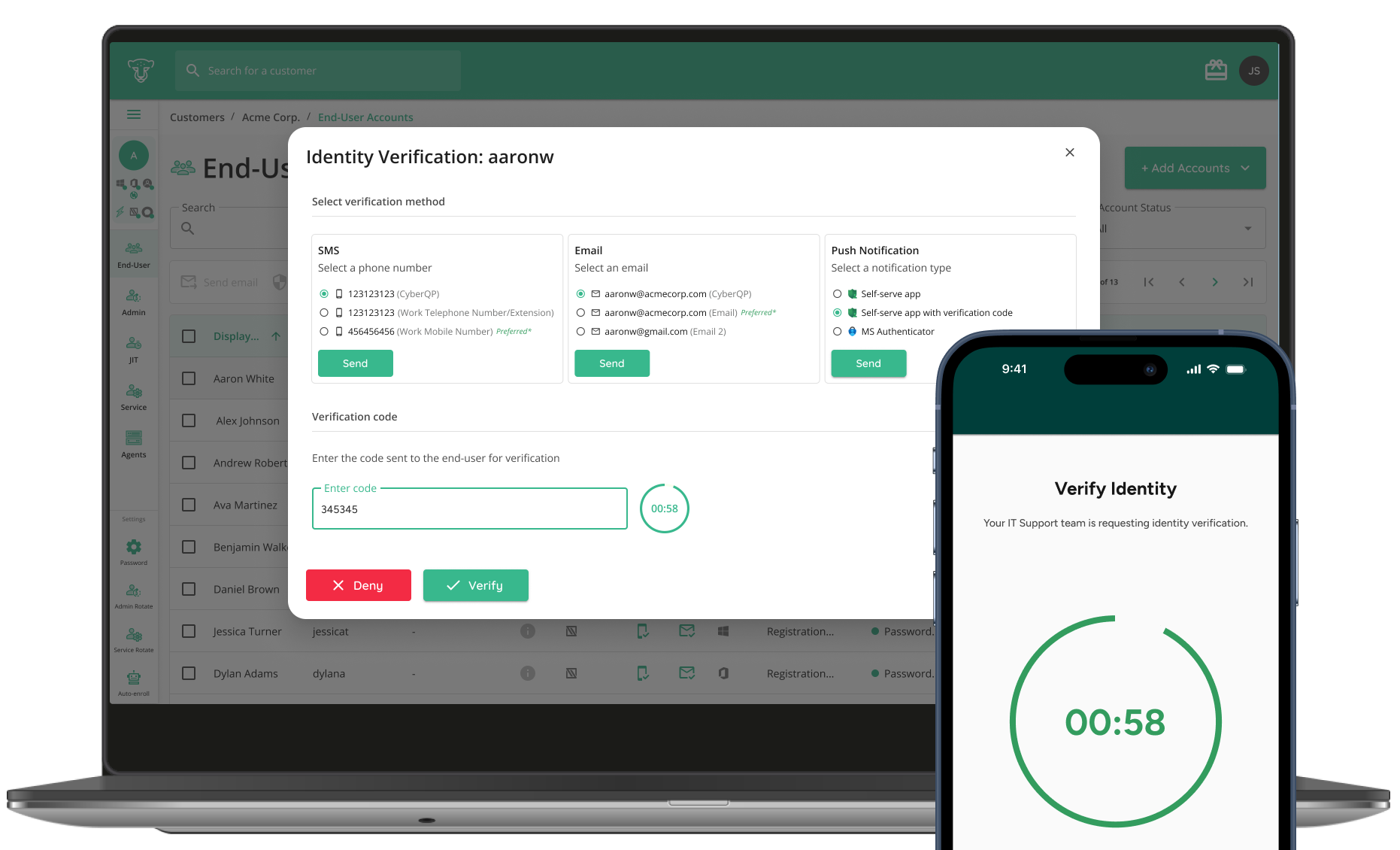
Before making account changes or resets, technicians use automated identity verification workflows to validate users—especially critical in social engineering scenarios. 

This prevents impersonation attacks, which are often the first move in targeted lateral attacks. Tour CyberQP’s helpdesk verification solution here.

Why Subtle Matters More Than Shiny

We’ve entered a phase of cybersecurity where most breaches are caused by what isn’t happening—credentials not being rotated, access not being removed, and identities not being verified. 

In contrast to EDRs and firewalls that react after the fact, CyberQP sits quietly between identity and access, enforcing good habits at scale. 

What IT Professionals Can Do Today

  • Audit your local admin footprint – how many devices have static elevated accounts?
  • Rotate credentials automatically – especially shared or legacy service accounts.
  • Remove standing access – move toward time-based or request-based privilege.
  • Verify every user identity – especially at the helpdesk layer.

CyberQP was built with these workflows in mind—because small, invisible gaps are where breaches start, and automation is the only way to close them at scale.

The M&S breach won’t be the last headline. But for SMEs, the goal isn’t to win the security arms race—it’s to build quiet, repeatable identity hygiene into your operations. CyberQP doesn’t just reduce risk—it reduces the opportunity for mistakes.

And sometimes, that’s all it takes to stop the next breach.

CyberQP redefines Zero Trust Helpdesk Security with leading-edge Privileged Access Management (PAM) and End-User Access Management (EUAM) solutions. Our platform enables secure elevated access for both technicians and end users, along with robust self-serve and identity verification capabilities. Backed by SOC 2 Type 2 certification, we empower IT professionals to eliminate identity and privileged access security risks, enforce compliance, and enhance operational efficiency. Our mission is simple: “Empowering Access, Redefining Privilege” for help desks around the globe. Learn more at https://cyberqp.com/tours/