
Cyber Insurance Readiness Checklist

Cyber Insurance Readiness Checklist

Get Ahead of Insurance Season
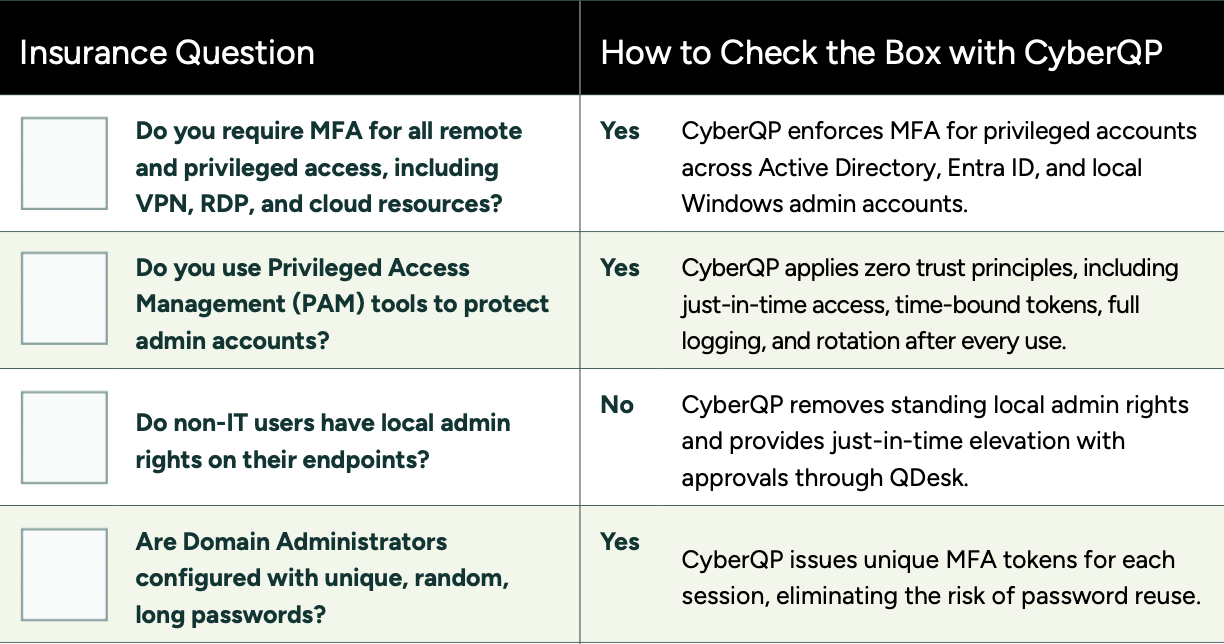
Before applications start hitting your inbox, take two minutes to pressure-test your environment. This printable, shareable Cyber Insurance Checklist helps you quickly assess MFA enforcement, privileged access controls, logging and evidence readiness, and deprovisioning workflows.

See How Ready You Really Are

Just in time access

Cyber insurance applications aren’t just about answering “yes.” Underwriters want proof. Our Cyber Insurance Readiness Checklist shows exactly what you’ll be asked and how to demonstrate compliance, from MFA enforcement and privileged access controls to audit-ready evidence and deprovisioning workflows.

With this checklist, you can:

  • Quickly verify your security posture before applications hit your inbox
  • Ensure every answer is backed by proof, not guesswork
  • Protect your coverage and avoid costly denials

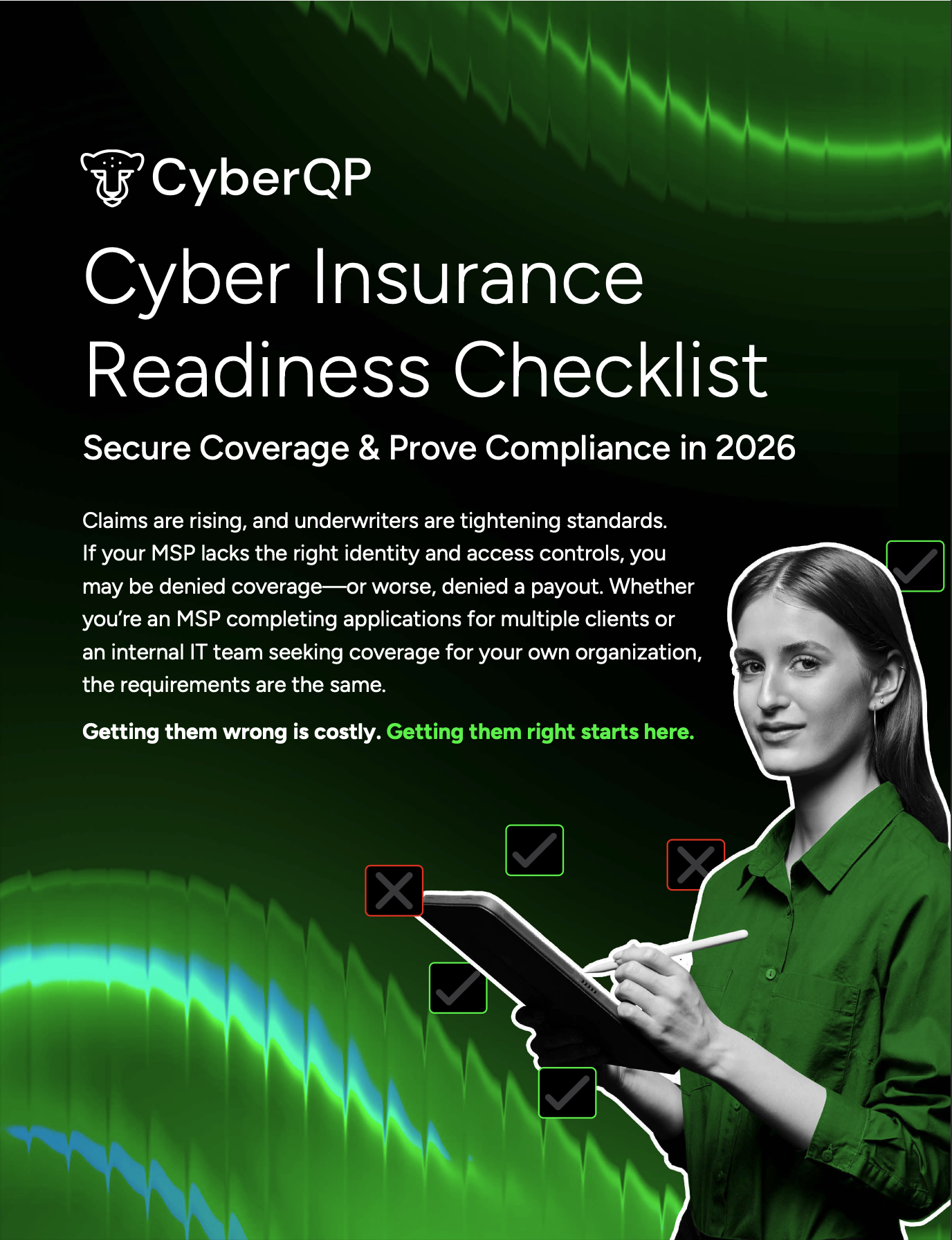
Above is a sneak peek of the checklist itself, a practical tool you can print, share with your team, and start using today.

When “Yes” Isn’t Verifiable
Just in time access

The application process doesn’t have to be so daunting. CyberQP maps identity and access controls directly to underwriting requirements, ensuring your answers are accurate, defensible, and ready when carriers or auditors request proof.

MSP Incident Insights

Don’t wait until it’s too late. This checklist makes it fast and easy to evaluate your environment and ensure you’re prepared for insurance season. Share it with your team, review your controls, and approach applications with confidence. Click below to download your Cyber Insurance Checklist and get ahead today.

Obtain Cyber Insurance Without The Hassle

Obtain Cyber Insurance Without The Hassle

Obtain Cyber Insurance Without The Hassle

Cyber insurance applications are no longer simple checklists, they’re risk declarations that require proof. Documented enforcement of MFA, privileged access management, identity controls, and audit logging is expected before coverage is approved. This guide breaks down what carriers are really asking, where most applications fail, and how IT leaders can confidently prove compliance. Download the guide to ensure your next application is backed with verifiable evidence.

Access the eBook

    The State of the Cyber Insurance Market

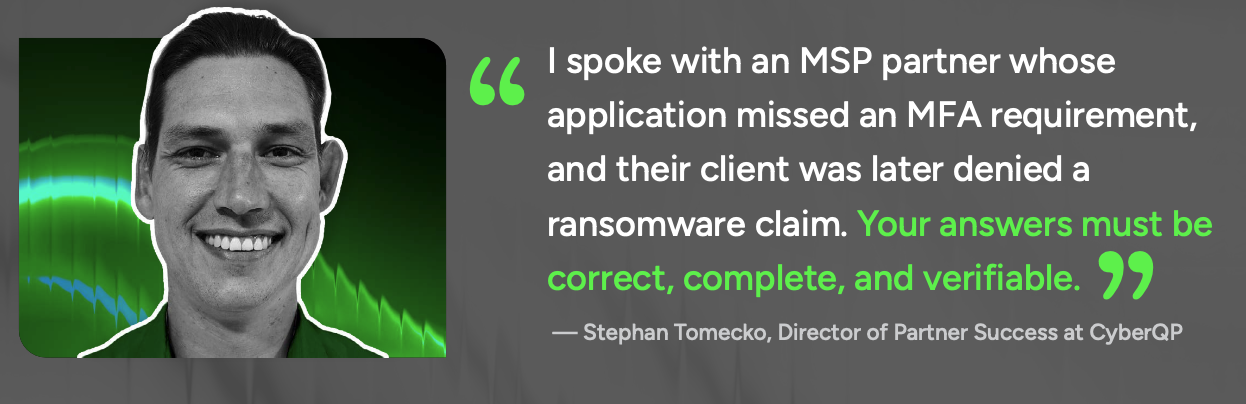
    According to industry reporting cited in this guide, 70% of ransomware-related claims were denied in 2025 due to misrepresented or unprovable controls. In many cases, organizations had tools in place, but couldn’t produce the logs, policies, or documentation to prove those controls were enforced at the time of the breach.

    If MFA, PAM, or account deprovisioning can’t be demonstrated with evidence, the answer may effectively become “no” when it matters most.

    Just in time access

    When “Yes” Isn’t Enough

    Many organizations check the box for MFA, PAM, or access controls assuming that having the tool in place is enough. It isn’t. Underwriters now expect proof of enforcement, not proof of purchase. That means screenshots of configuration, audit logs tied to real users, documented policies, and evidence that controls were active at the time of a breach.

    Activate JIT

    See How Ready You Really Are

    Password notifications

    Cyber insurance applications aren’t just about answering “yes.” Underwriters want proof. Our Cyber Insurance Readiness Checklist shows exactly what you’ll be asked and how to demonstrate compliance, from MFA enforcement and privileged access controls to audit-ready evidence and deprovisioning workflows.

    With this checklist, you can:

    • Quickly verify your security posture before applications hit your inbox
    • Ensure every answer is backed by proof, not guesswork
    • Protect your coverage and avoid costly denials

    Above is a sneak peek of the checklist itself, a practical tool you can print, share with your team, and start using today.

    MSP Incident Insights

    Download the eBook Today

      HIPAA Control Mappings | CyberQP eBook

      HIPAA Control Mappings | CyberQP eBook

      EBOOK

      HIPAA CONTROL MAPPINGS

      1. Home
      2. Cyber Insurance

      Where Access Is Granted, Security Must Be Enforced.

      Healthcare breaches don’t start with networks, they start with identity. In hospitals and healthcare environments, every login, password reset, and privilege elevation can put ePHI at risk. This eBook explores how identity-first access controls help IT teams enforce least privilege, verify users at the point of access, and maintain audit-ready compliance with HIPAA requirements.

      MSP Incident Insights

      How Privileged Access and Identity Controls Map to HIPAA Requirements

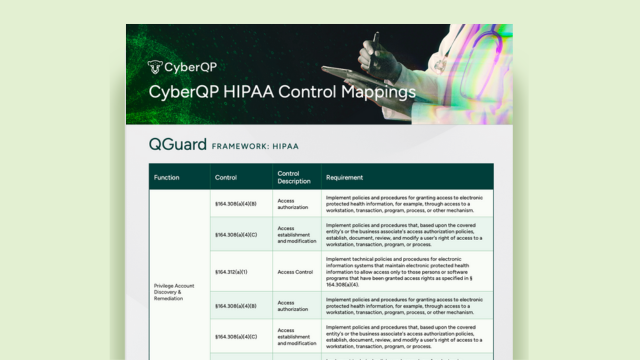
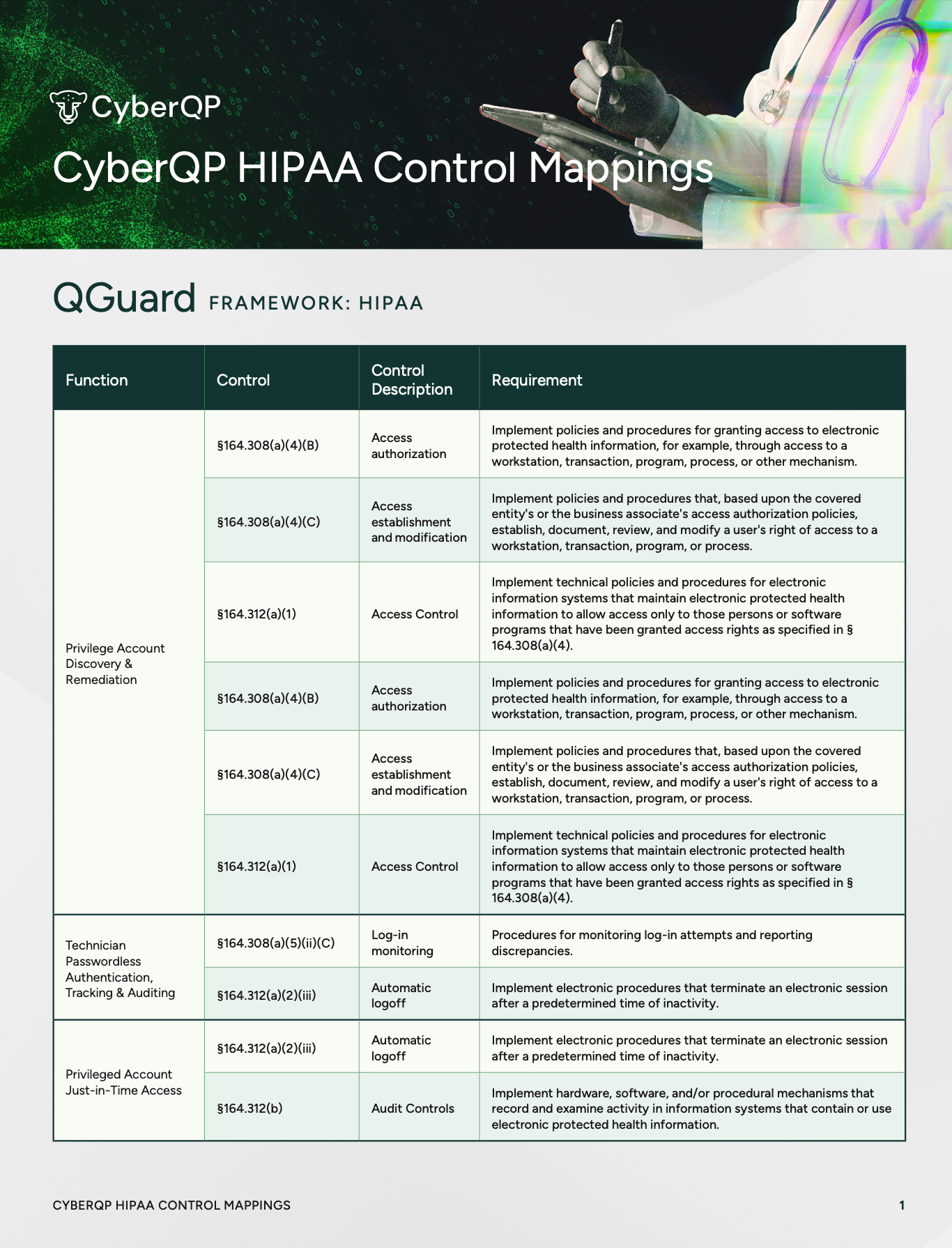
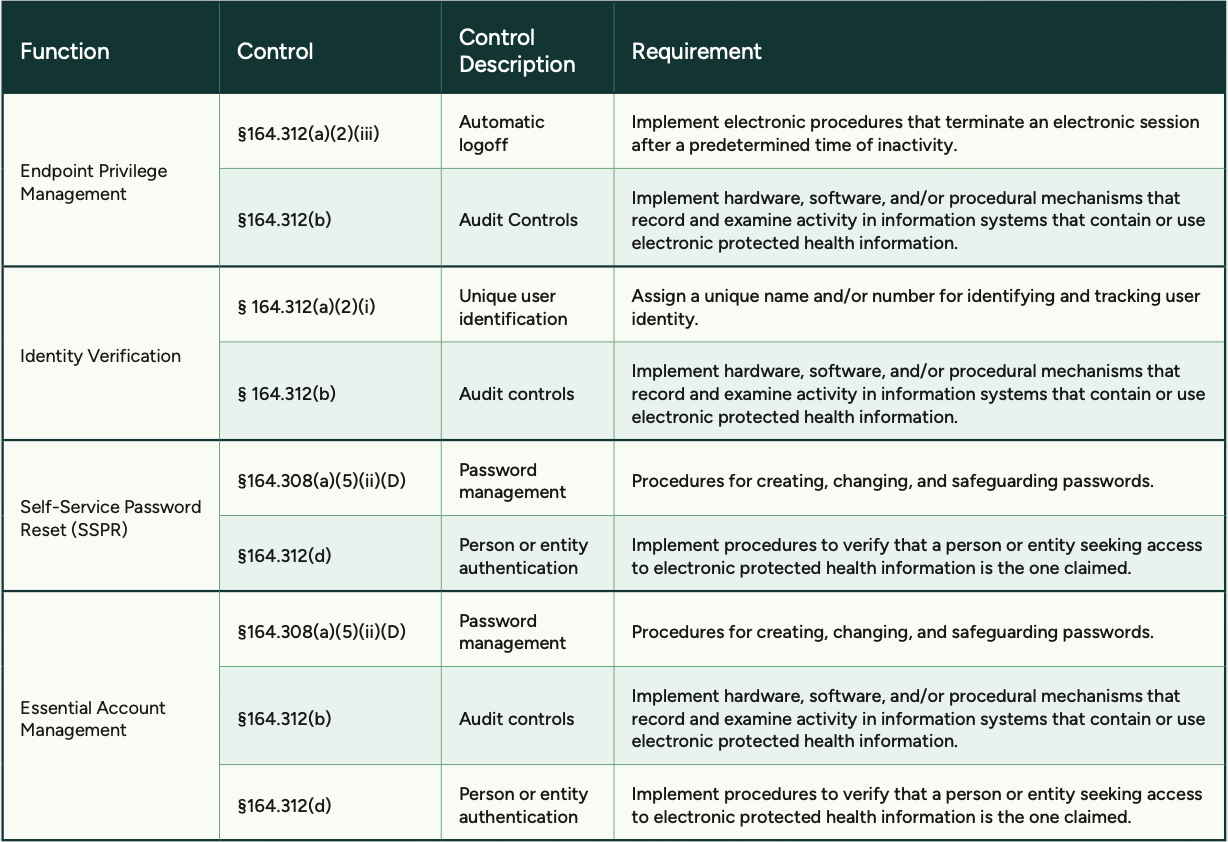
      HIPAA compliance isn’t just about implementing security controls, it’s about clearly demonstrating how access to ePHI is governed, verified, and audited. This resource maps HIPAA Security Rule requirements directly to CyberQP capabilities and shows exactly how controls are enforced across healthcare environments.

      Instead of relying on assumptions or fragmented documentation, you gain clear, audit-ready visibility into which HIPAA controls CyberQP supports. The result is faster audits and greater confidence when protecting patient data.

      How CyberQP Enforces and Audits Privileged Access

      Privileged Account Just-in-Time (JIT) Access

      Control area: §164.312(b) Audit Controls

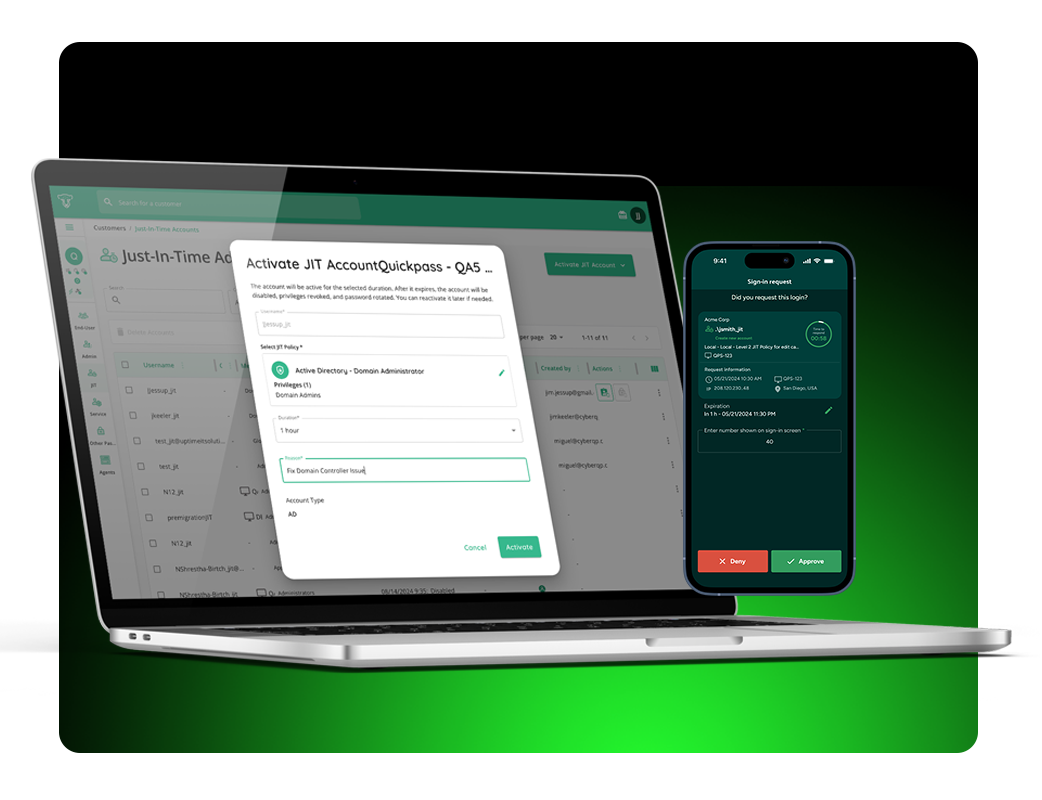
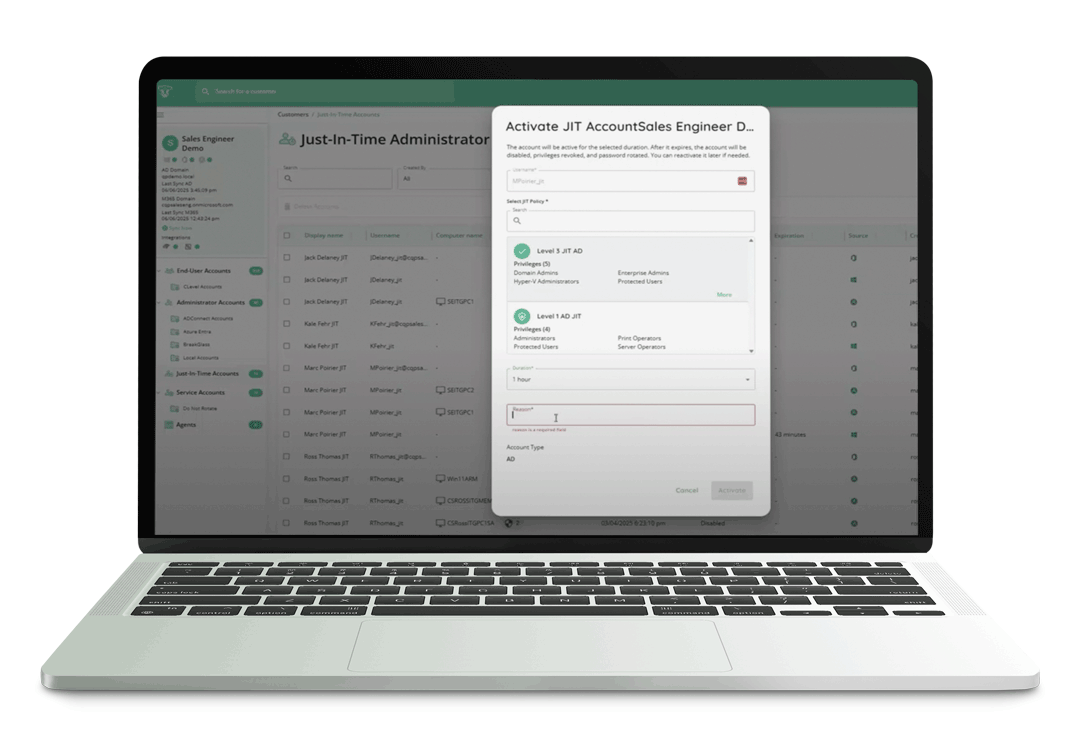
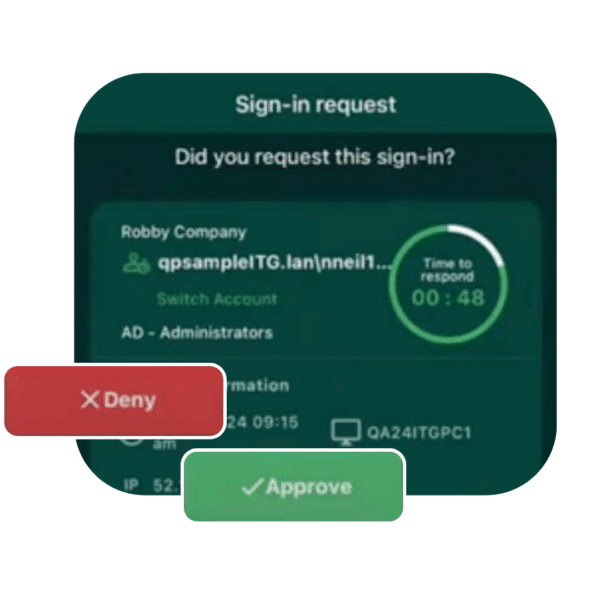
      CyberQP’s JIT access enforces temporary, context-based privilege elevation so users and technicians don’t retain standing administrative rights. All JIT sessions are logged and auditable, helping satisfy audit control requirements around monitoring and examining system activity.

      Just in time access

      Passwordless MFA for Technicians

      Control area: §164.308(a)(5)(ii)(C) Log-in Monitoring, §164.312(a)(2)(iii) Automatic Logoff

      CyberQP enables passwordless authentication and session tracking for technicians and privileged users. This improves log-in monitoring and auditing, while automatic session termination and authentication events align with controls around termination of inactive sessions.

      Activate JIT

      Self-Service Password Reset (SSPR)

      Control area: §164.308(a)(5)(ii)(D) Password Management

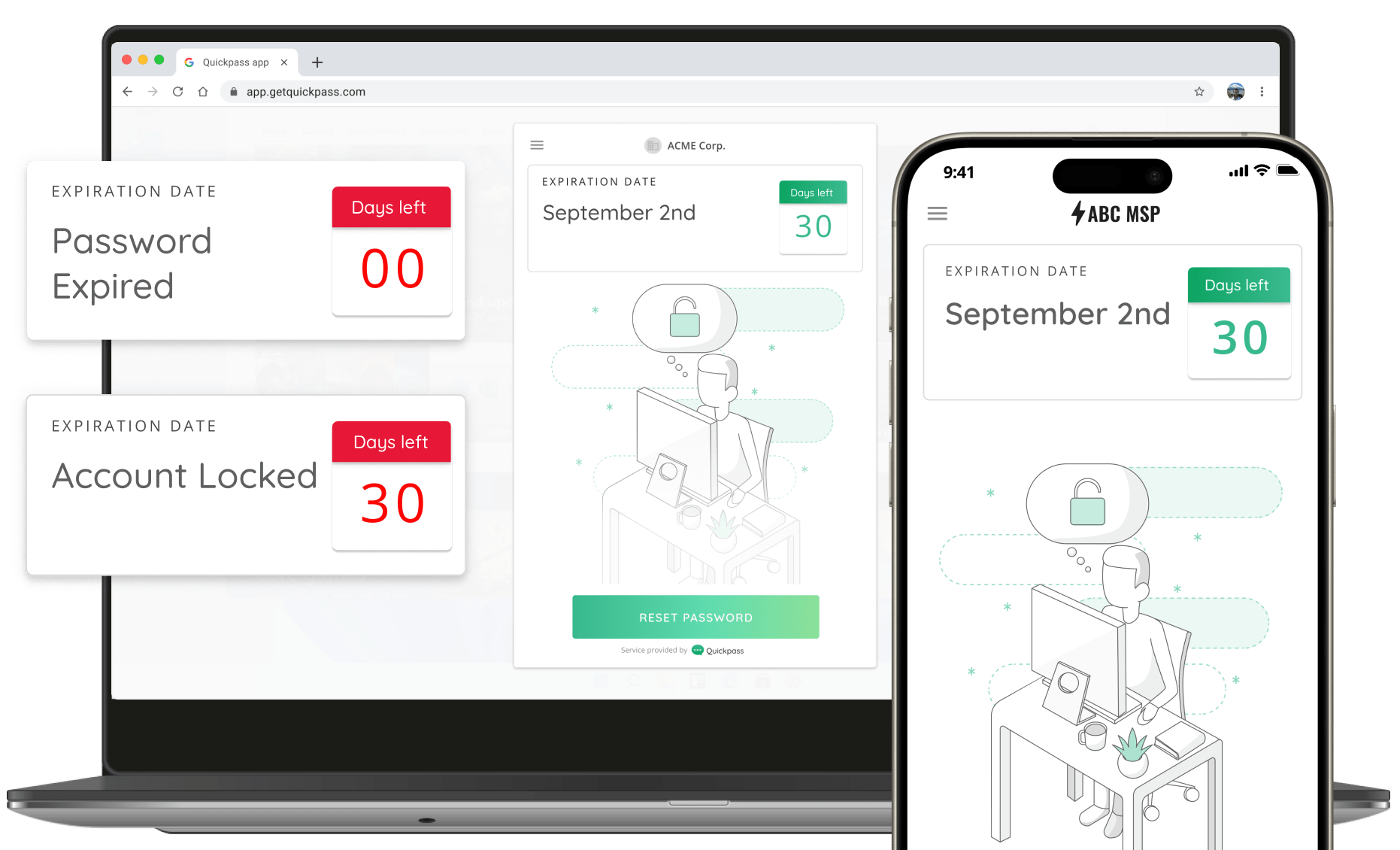
      CyberQP’s self-service password reset workflows are tied to identity assurance, reducing helpdesk risk, and enabling compliant password lifecycle processes.

      Password notifications
      MSP Incident Insights

      Download the HIPAA Control Mapping and Prove Your Access Controls

        Trust But Verify: The Identity-First Strategy for Real Zero Trust

        Trust But Verify: The Identity-First Strategy for Real Zero Trust

        EBOOK

        Trust But Verify: The Identity-First Strategy for Real Zero Trust

        1. Home
        2. Cyber Insurance

        Real Zero Trust Starts with Identity

        Zero Trust can’t succeed without strong identity controls at the point where access is granted. In this eBook, you’ll learn why identity has become the primary attack surface, and how enforcing verification combined with least privilege at the endpoint changes the security equation. Explore a practical, identity-first approach to Zero Trust that helps IT teams reduce risk.
        MSP Incident Insights

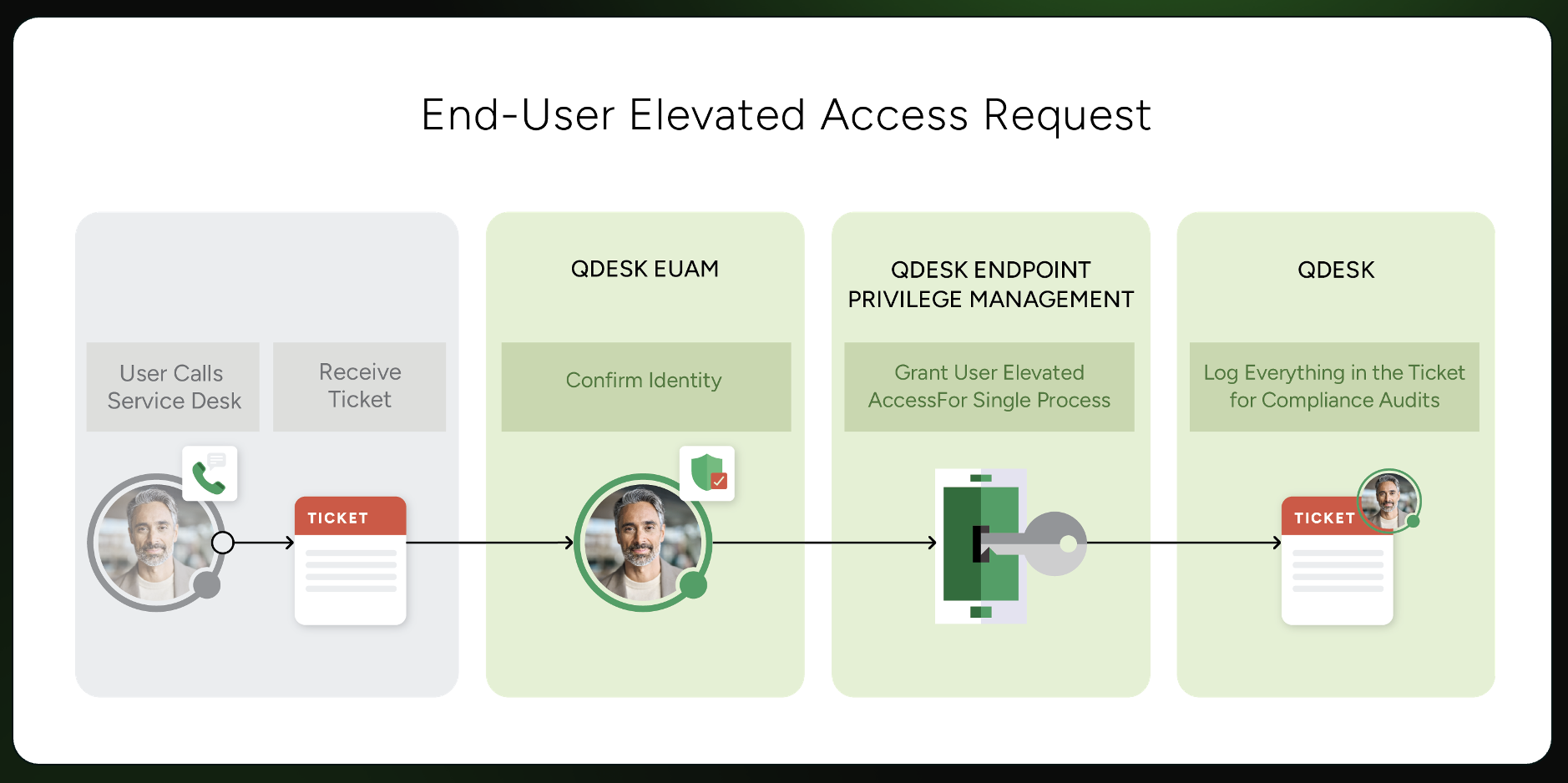
        A Secured End-User Elevation Workflow

        A secure end-user elevation workflow treats privilege as a controlled, identity-verified process, not a standing entitlement. Every elevation request begins with identity confirmation, ensuring the person requesting access is who they claim to be before any privilege is granted. Access is scoped to a single task or time sensitive process, and is automatically revoked when the job is complete. Eliminating persistent admin rights on the endpoint.

        Each action is logged and tied back to a verified identity, creating a complete audit trail for compliance investigations and insurance reviews. By enforcing least privilege at the moment access is needed, you can reduce lateral movement risk while maintaining technician efficiency.

        The Security Gap Most Organizations Haven’t Closed

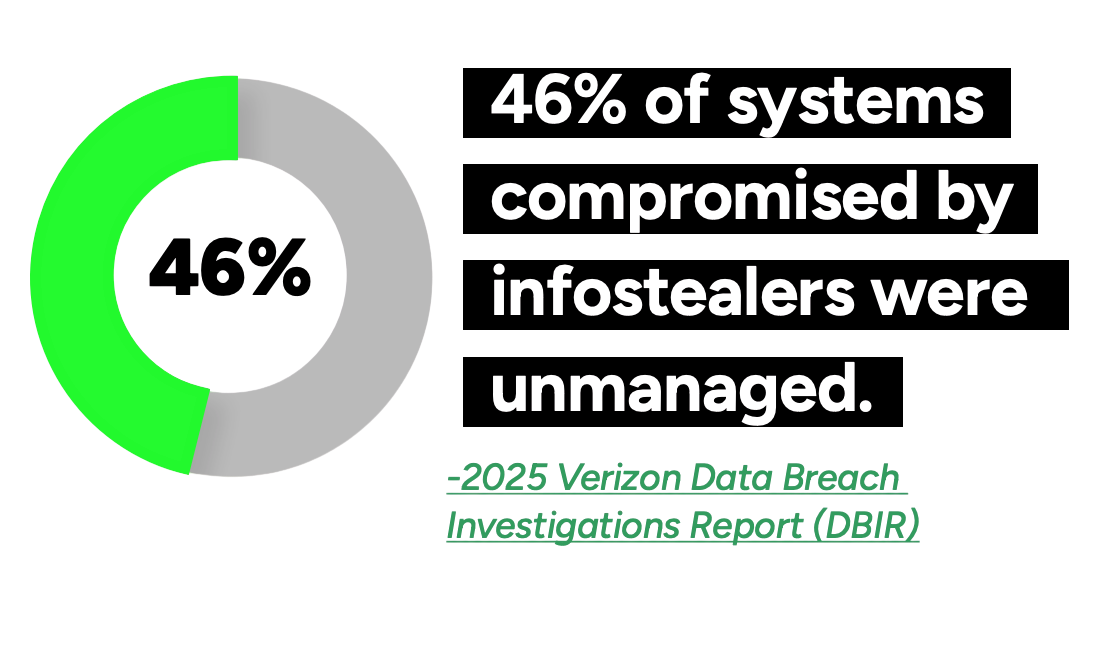
        Unmanaged Systems Are the Easiest Way In

        Attackers target what organizations can’t see or control. Unmanaged endpoints and accounts create blind spots that bypass security policies entirely. This makes identity-based attacks faster, quieter, and more effective.
        MSP Statistics

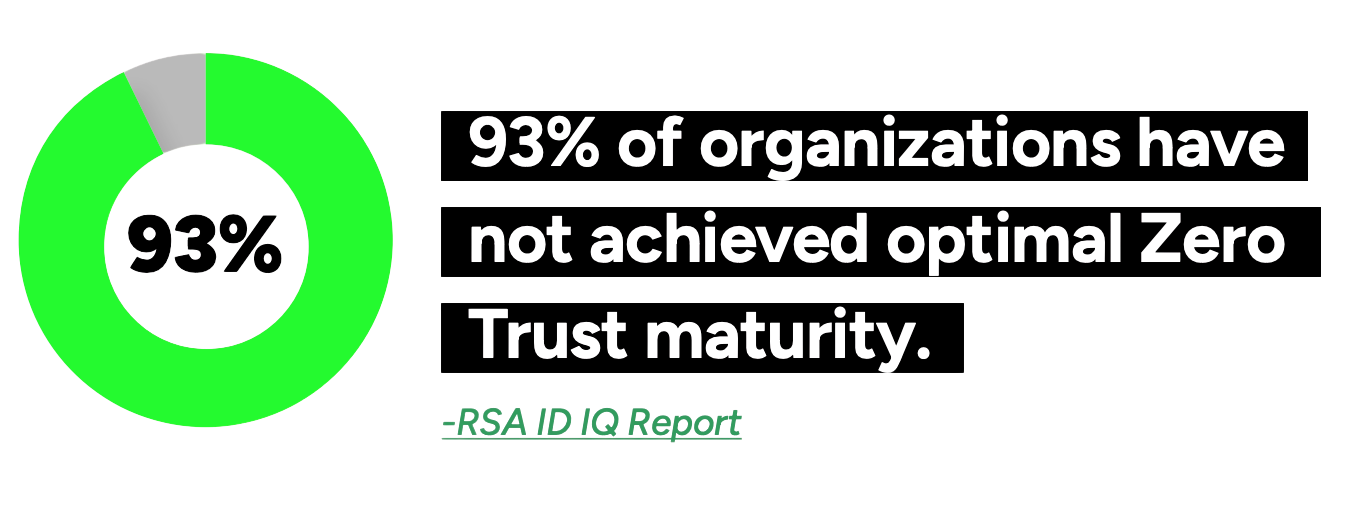
        Your Security Maturity Isn’t Where It Should Be

        Most organizations believe they’re protected, but gaps in identity governance, access controls, and enforcement tell a different story. Without consistent verification, security frameworks fall short where it matters most: End User Access Management.
        MSP Statistics
        MSP Incident Insights

        Turn Identity Gaps Into Enforced Control.

          CMMC Responsibility Matrix for Audit Preparation

          CMMC Responsibility Matrix for Audit Preparation

          WHITE PAPER

          CMMC Responsibility Matrix for Audit Preparation

          1. Home
          2. Cyber Insurance

          Get Audit Ready

          Preparing for a CMMC assessment can be complex when control ownership isn’t clear. Our CMMC Shared Responsibility Matrix helps you quickly align CyberQP’s platform capabilities with customer responsibilities so you can streamline audit prep, eliminate guesswork, and confidently demonstrate control ownership.


          MSP Incident Insights

          Stop Guessing, Start Demonstrating Control.

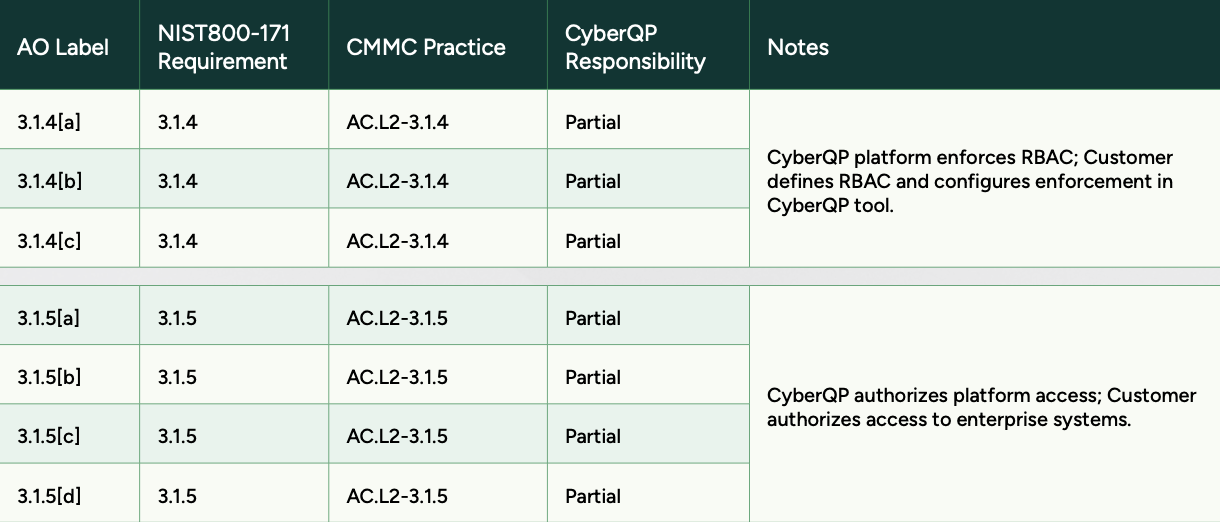
          Preparing for an audit isn’t just about having controls in place, it’s about clearly showing who is responsible for what. Our Shared Responsibility Matrix breaks down NIST 800-171 and CMMC practices line by line, mapping each requirement to CyberQP’s role and the customer’s role.

          Instead of vague assumptions, you get documented clarity auditors expect: which controls are partially enforced by CyberQP, where customer configuration is required, and how responsibilities align across access control, authorization, and enforcement. This makes audit conversations faster, cleaner, and far easier to defend.

          Examples of CMMC 2.0 Security Controls That PAM Supports

          Access Control (AC):

          Privileged Access Management solutions will help you limit access to sensitive information, keeping the number of security risks as low as possible and minimizing your attack surfaces.

          MSP Statistics

          Identification and Authentication (IA):

          This requirement calls for security measures to safeguard CUI and only grant access to authorize users, which specifically calls for identity verification before granting access to an organization’s digital environments or devices.

          MSP Statistics
          MSP Incident Insights

          Are You Audit Ready?

          This guide gives you clear, documented evidence of how privileged access controls are shared, enforced, and validated against CMMC and NIST 800-171 requirements. If you are preparing for an assessment or tightening controls ahead of one, this reference helps you walk into the audit with clarity and confidence.